Top SMD LED Chip Manufacturer Guangmai Technology Expands Advanced Lighting Solutions
SHENZHEN, GUANGDONG, CHINA, October 15, 2026 /EINPresswire.com/ -- Guangmai Technology Co., Ltd. is strengthening its
Press Release Disclaimer: This is a press release distributed through the XPR Media network. It has not been independently verified by our newsroom.

SHENZHEN, GUANGDONG, CHINA, October 15, 2026 /EINPresswire.com/ —
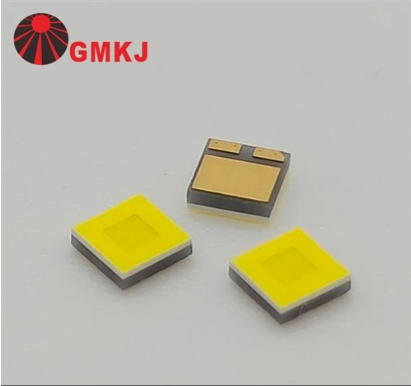
Guangmai Technology Co., Ltd. is strengthening its presence in the LED lighting components market with a product portfolio designed to serve lighting manufacturers, electronics developers, and industrial equipment suppliers. Established in Shenzhen, China, in 2009, the company focuses on LED packaging technology and the development of light-source components for a variety of applications. Its offerings include surface-mounted device (SMD) LED chips, High Power LED products, COB LED solutions, LED modules, and customized LED assemblies. By combining different LED package formats with application-oriented product development, Guangmai Technology supports customers seeking light sources for commercial, residential, industrial, automotive, and specialized lighting systems.
The growing diversity of LED applications has increased demand for components that balance luminous output, energy efficiency, thermal performance, optical characteristics, and product lifespan. Lighting manufacturers must select components according to the requirements of the finished fixture, rather than considering brightness alone. Guangmai Technology Co., Ltd. addresses these needs through a broad product range that allows customers to compare package types, power ratings, colors, wavelengths, and configurations for different lighting designs.
SMD LED Chips for Flexible Lighting Design
SMD LED technology has become an important foundation of modern lighting because its compact package format supports automated assembly and integration into printed circuit boards. Depending on the package, chip configuration, and electrical characteristics, SMD LEDs can be used in general illumination, display systems, indicator lights, automotive lighting, and specialized optical equipment.
Guangmai Technology Co., Ltd. offers SMD LED products in several categories, including white, color, ultraviolet, infrared, RGB, and RGBW LEDs. Its portfolio includes common package families such as 3030 and 5050, along with ceramic-based and other specialized packages intended for different performance requirements. This variety gives lighting designers flexibility when choosing components for applications with different optical, electrical, and mechanical constraints.
White SMD LEDs are widely used in downlights, ceiling lights, panel lights, bulbs, spotlights, and other luminaires. Their selection typically depends on factors such as color temperature, luminous flux, color rendering, forward voltage, drive current, and thermal resistance. A lighting manufacturer developing a warm indoor fixture, for example, may prioritize color quality and visual comfort, while an outdoor luminaire may place greater emphasis on output, thermal management, and environmental durability.
Color and multi-channel SMD LEDs provide additional design options. RGB and RGBW packages can support color-changing effects, architectural illumination, stage lighting, decorative displays, and other applications where dynamic lighting is required. By integrating multiple color channels into a compact package, these devices can simplify certain optical and circuit designs, although the final result depends on the control system, drive electronics, optics, and thermal design.
Specialized SMD LED products also address applications outside conventional visible-light illumination. Ultraviolet LEDs may be used in selected curing, sensing, analytical, and photochemical systems, while infrared LEDs can support sensing, machine vision, and other optical applications. Different wavelengths require careful consideration of optical output, operating conditions, safety requirements, and the characteristics of the target application.
High Power LED Products for Demanding Applications
High Power LED products are designed for lighting systems that require substantial light output from individual emitters or compact light-source assemblies. Depending on their configuration, these LEDs can be used in spotlights, flashlights, stage lights, industrial illumination, horticultural systems, outdoor lighting, and other applications where intensity and optical control are important.
Guangmai Technology Co., Ltd. lists multiple High Power LED categories, including 1W and 3W products, colored power LEDs, RGB and RGBW emitters, ultraviolet LEDs, and infrared LEDs. The broader product range also includes higher-power SMD packages and ceramic LED emitters. Such choices allow designers to evaluate components according to the output and operating requirements of their finished equipment.
High-power LED selection involves several interconnected engineering factors. Electrical input determines the energy supplied to the emitter, but only part of that energy becomes visible or useful optical output. The remaining energy contributes to heat, which must be managed through an appropriate thermal path. If junction temperature becomes excessive, performance and reliability can be affected. Heat sinks, circuit-board materials, thermal interface materials, current control, and airflow may all influence the final system design.
Optical performance is equally important. Lens geometry, reflector design, beam angle, emitter size, and the spacing between light sources determine how light is distributed. A spotlight intended to illuminate a distant target requires a different optical arrangement from a broad-area floodlight. In horticultural lighting, designers may focus on selected wavelengths and photon delivery, while industrial inspection systems may require particular spectral characteristics and consistent output.
Guangmai Technology’s portfolio gives equipment developers a range of emitter formats to assess against these different needs. Buyers should compare detailed datasheets for each model, including forward voltage, rated current, thermal resistance, optical output, wavelength or color temperature, and recommended operating conditions. Testing a component in the intended fixture can help establish whether it delivers the required performance under actual thermal and optical conditions.
COB LED Technology for Integrated Light Sources
Chip-on-board (COB) LED technology places multiple LED chips closely together on a substrate to create a compact light-emitting surface. This approach can support high light output from a relatively concentrated area and can simplify optical integration in suitable luminaire designs. COB LEDs are often considered for downlights, spotlights, track lighting, photography lights, stage equipment, and other systems that benefit from a concentrated source.
Guangmai Technology Co., Ltd. includes COB LED products in its portfolio, alongside High Power LED emitters and conventional SMD packages. Its published range includes high-power COB LEDs, flip-chip COB products, AC COB LEDs, RGB COB LEDs, and color COB options. Different configurations are intended to address different combinations of electrical input, optical output, color control, and integration requirements.
One potential advantage of COB technology is its relatively continuous emitting surface compared with an arrangement of widely separated individual LEDs. Depending on the optical system, this can make it easier to design a focused beam or achieve a visually unified light source. The final lighting quality, however, still depends on the phosphor system, chip arrangement, reflector or lens, drive current, and thermal management.
Flip-chip designs can offer different electrical and thermal connection arrangements compared with conventional chip structures. Their suitability depends on the product architecture and the requirements of the final application. Buyers should not assume that every COB or flip-chip COB product has the same performance characteristics; package dimensions, rated power, electrical specifications, and thermal requirements vary by model.
The company also lists COB products for colored and multi-channel applications. RGB and RGBW configurations can support stage lighting, architectural lighting, and dynamic visual effects. Ultraviolet and infrared COB products may be used in selected specialized systems where a particular wavelength or concentrated optical output is required. Such applications demand attention to wavelength accuracy, output uniformity, operating temperature, and the safety procedures appropriate to the emitted radiation.
For lighting designers, the key question is how a particular COB package performs within the complete fixture. Heat-sink design, optical coupling, driver compatibility, mounting arrangements, and maintenance access all influence system performance. A carefully matched COB source can help reduce design complexity, but engineering validation remains essential before a product enters mass production.
LED Modules and Customized Assembly Services
Beyond individual emitters, Guangmai Technology Co., Ltd. offers LED modules and LED printed circuit board assembly services. Modules can combine LED sources with supporting electrical or mechanical elements, providing a more integrated component for equipment developers. Depending on the design, a module may include a specific arrangement of LEDs, an optical element, a board, or other features needed for the target application.
The company also lists UV LED modules, LED lighting modules, LED lenses, COB holders, and related accessories. These components can support the development of complete light-source assemblies by helping customers address optical alignment, mounting, and integration. Their suitability depends on the dimensions of the fixture, the desired light distribution, electrical requirements, and operating environment.
Customization can be valuable when a standard component does not fit a product’s design constraints. An equipment manufacturer may need a specific wavelength, package format, color combination, PCB layout, or optical configuration. Guangmai Technology identifies OEM and ODM services among its business capabilities, allowing customers to discuss product requirements and potential customized solutions.
A well-defined development process generally begins with an application brief covering the required light output, wavelength or color temperature, operating current, package dimensions, thermal limits, and target operating conditions. This is followed by component selection, prototype evaluation, and verification against the product specification. For modules and assembled boards, electrical layout, mechanical fit, thermal behavior, and compatibility with the control electronics should be reviewed before production.
Quality Management and Manufacturing Considerations
LED performance depends on both the quality of the semiconductor components and the consistency of the packaging and assembly processes. Factors such as die attachment, wire bonding or other interconnection methods, encapsulation, phosphor application, inspection, and binning can influence the characteristics of the finished LED. Consistency between batches is particularly important for manufacturers producing luminaires in large quantities.
Guangmai Technology states that it uses automated production equipment and aging-test systems in its LED manufacturing operations. The company also describes quality-control procedures covering stages from raw material selection through production and final inspection. These practices are relevant to customers who need predictable component characteristics and dependable supply for repeated manufacturing runs.
The company references ISO-based quality management and certifications such as CE, RoHS, and LM-80 across its published materials. Certification and test coverage should always be verified for the particular product and intended application. LM-80 data, for example, concerns the maintenance of luminous flux or photon flux and color characteristics of LED packages, arrays, or modules under specified test conditions; it should not be interpreted as a guarantee of the service life of an entire luminaire.
For procurement teams, evaluating a supplier involves more than reviewing a product catalogue. Datasheet accuracy, electrical and optical test data, binning information, sample consistency, traceability, and communication about product revisions are all important. Customers should also establish how changes to materials or manufacturing processes are managed and what documentation can be supplied for the exact component being purchased.
Applications Across Lighting and Optical Industries
Guangmai Technology’s SMD, High Power LED, and COB LED products can be considered for a broad range of applications. In commercial and residential lighting, LED packages are used in downlights, bulbs, ceiling lights, track lights, and decorative fixtures. In industrial environments, specialized emitters can support inspection equipment, machine vision, sensing, and selected process applications. Automotive and outdoor lighting systems may require particular attention to vibration, temperature, optical performance, and applicable qualification requirements.
Entertainment and architectural lighting represent another area where color control and concentrated output can be important. RGB and RGBW emitters can support dynamic scenes, wall washers, spotlights, and stage fixtures. Horticultural lighting may require carefully selected wavelengths and photon output, while UV and infrared applications need product specifications matched to the physical process or sensing system involved.
These applications illustrate why a single LED package cannot serve every purpose equally well. A component designed for general illumination may not be suitable for a UV curing system, and a high-power emitter optimized for a narrow beam may not be ideal for a broad, uniform light panel. Matching the source to the end use can improve the effectiveness of the overall design and reduce the risk of performance problems during operation.
Outlook for Guangmai Technology
The LED components market continues to evolve as lighting manufacturers seek more efficient, compact, and application-specific sources. Advances in package design, thermal management, optical integration, and electronic control create opportunities for products tailored to increasingly diverse requirements. At the same time, customers must evaluate performance using reliable test data and consider the complete lighting system rather than the emitter alone.
Guangmai Technology Co., Ltd. serves this market with a portfolio spanning SMD LED chips, High Power LED emitters, COB LED products, LED modules, accessories, and customized assembly services. Its range allows buyers to compare different package formats and optical configurations for general illumination and specialized lighting. For lighting manufacturers and equipment developers, reviewing detailed specifications, testing samples, and confirming quality documentation remain important steps in selecting components for production.
About Guangmai Technology Co., Ltd.
Guangmai Technology Co., Ltd., also known in company materials as Shenzhen Guangmai Electronics Co., Ltd. and associated with the GMKJ brand, is a Shenzhen-based LED packaging and light-source manufacturer established in 2009. The company focuses on LED component development, manufacturing, sales, and technical support for lighting and optical applications.
Its product portfolio includes white, color, UV, UVC, infrared, RGB, and RGBW SMD LED chips; High Power LED emitters; COB LED products, including high-power and flip-chip configurations; LED modules; LED lenses and COB holders; LED PCBA assembly services; and selected VCSEL laser products. These components serve potential applications in commercial, residential, industrial, automotive, horticultural, architectural, entertainment, and specialized optical systems.
The company identifies automated production equipment, aging-test systems, OEM and ODM customization, and quality-control procedures among its manufacturing capabilities. Customers can consult its product documentation and contact its technical team to confirm model-specific electrical, optical, thermal, and certification requirements.
For more information about its products and services, visit www.gmleds.com.
Address: Guangmai Tech Park, No.96, Guangtian Rd, Yanluo, Baoan Dist, Shenzhen, China
Official Website: https://www.gmleds.com/
John Wang
Guangmai Technology Co., Ltd.
info@gmleds.com
Legal Disclaimer:
EIN Presswire provides this news content “as is” without warranty of any kind. We do not accept any responsibility or liability
for the accuracy, content, images, videos, licenses, completeness, legality, or reliability of the information contained in this
article. If you have any complaints or copyright issues related to this article, kindly contact the author above.

Media gallery