Large-Diameter Circle Lens Manufacturers: Top 10 contact lens Suppliers Compared
SHENZHEN, GUANGDONG, CHINA, November 13, 2026 /EINPresswire.com/ -- Large diameter is not one market. A 14.5 mm
Press Release Disclaimer: This is a press release distributed through the XPR Media network. It has not been independently verified by our newsroom.
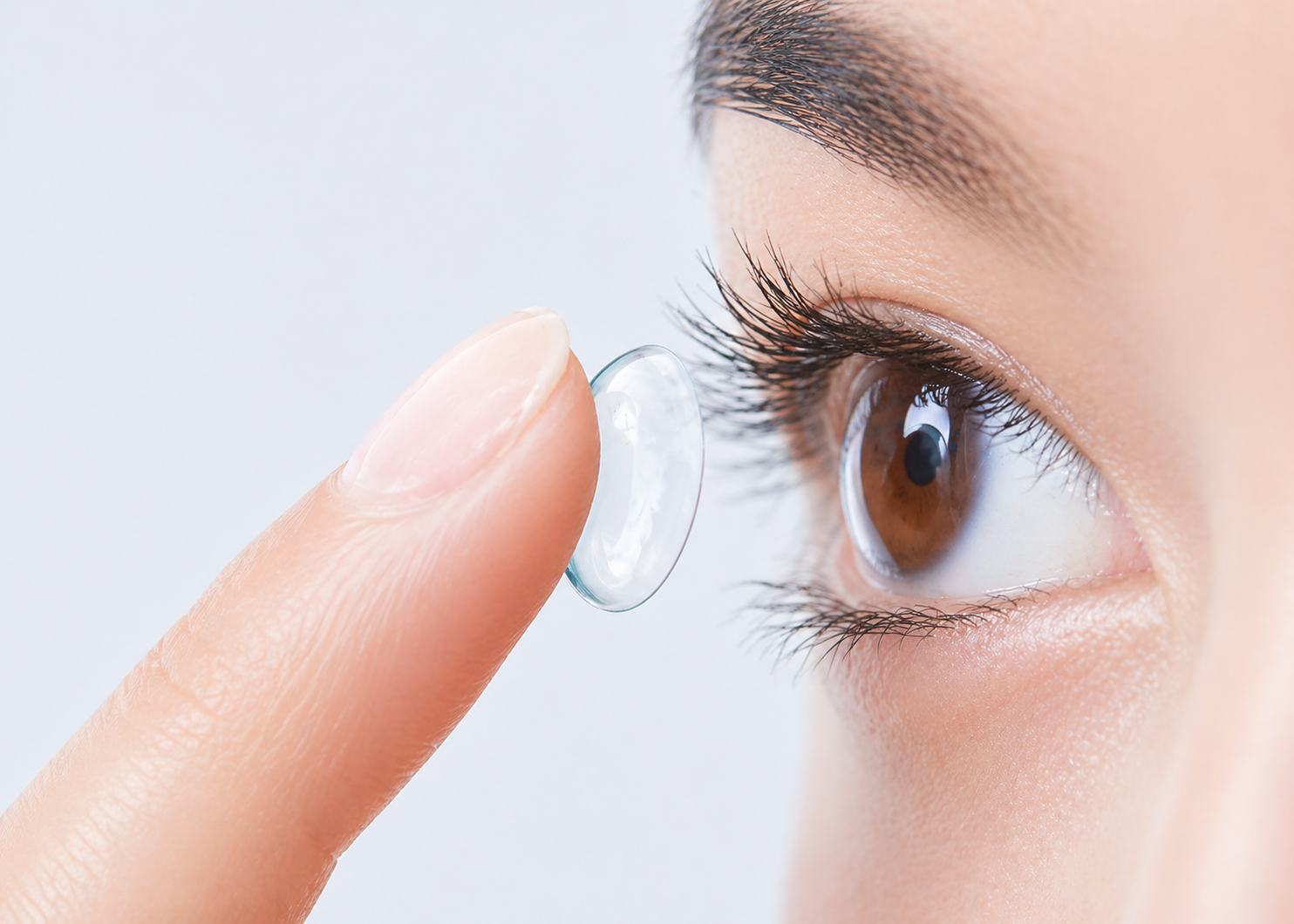

SHENZHEN, GUANGDONG, CHINA, November 13, 2026 /EINPresswire.com/ — Large diameter is not one market. A 14.5 mm cosmetic lens and a 22 mm sclera lens share a name and a print process, and little else — and the number that decides the look is not the one on the box.
A buyer searching for manufacturers of large-diameter circle lenses is usually comparing two product categories under one phrase, according to a review of ten suppliers’ published specifications. Of the ten, two publish a diameter range past 14.5 mm. The other eight build on 14.0 mm and 14.5 mm lines, which is where the “big size” segment of the cosmetic market sits. The distinction matters: tooling, fit and price per pair change where a lens stops covering the cornea and starts covering the sclera.
What “large diameter” means in this category
A circle lens is a soft lens carrying a printed annulus that frames the iris. The term is a marketing category, not a regulatory one, and no vocabulary standard defines it. It describes a lens whose printed zone is wider than the wearer’s visible iris, so a ring of color sits outside it and the eye reads larger.
Two numbers govern that effect. DIA is the total diameter and describes fit. G.DIA, or graphic diameter, is the diameter of the printed zone and describes the look. G.DIA is not defined in ISO 18369-1, the vocabulary standard for ophthalmic optics, so it is a supplier term with a supplier-specific definition — and two lenses both sold as 14.5 mm can produce visibly different enlargement.
The size ladder is conventional rather than standardized. A 14.0 to 14.5 mm lens sits on the cornea and is sold as an everyday cosmetic lens. A 16 mm lens extends past the limbus. A 17 mm lens is sold as a mini sclera. A 22 mm lens vaults the limbus and is sold as a full sclera. Each step up is a different fitting problem, not a larger version of the same one.
Why diameter is a tooling number, not a print number
A print can be redrawn in a day; a diameter cannot. Increasing DIA changes sagittal depth, edge profile and the relationship between lens and cornea, all set by the mold or the lathe path. A factory that prints any pattern a buyer sends but cuts one geometry has a fixed diameter ceiling, and no artwork moves it.
The print has to scale with that geometry. A pattern drawn for a 14.2 mm lens and applied to a 16 mm lens leaves the clear pupil zone undersized against the optic zone, which is the defect buyers describe as a halo or a washed-out center. Registration between print and geometry is a tooling decision, which is why the diameter and G.DIA questions are the same question asked twice.
How entity structure decides who can go large
Five roles touch a large-diameter order: the brand owner, the tooling owner, the printer, the packer and the registration holder. They are rarely one company, and the diameter ceiling belongs to whichever of them owns the tool.
A wholesaler’s ceiling is its production partner’s ceiling, and it changes when the partner changes. A coordinator working through several factories has several ceilings and several G.DIA conventions. A factory that cuts its own molds sets its own ceiling and can quote the same geometry on a reorder. Two suppliers advertising the same 14.5 mm lens can therefore answer a 16 mm question differently.
The market behind the size premium
Grand View Research valued the global contact lens market at USD 9.8 billion in 2024 and projects USD 15.5 billion by 2030, a compound annual growth rate of 8.1 percent, with North America accounting for 37.2 percent of 2024 revenue. Cosmetic lenses sit inside that figure, which is why large-diameter capacity is usually added to an existing medical line, not built as a separate business.
The Top 10 contact lens suppliers:
1. Gansu Constar Technology Group
Constar operates six facilities across Gansu and Hunan with a combined capacity of 15 million lenses per month, more than 4,000 designs and over 500 in-stock SKUs, holding FDA clearance, CE 0197 and ISO 13485. Its published catalog includes a large-eye series at 14.50 to 16.00 mm alongside cat-eye, sclera and full-eye designs, which places it as one of two suppliers here whose range extends past 14.5 mm. Tooling, printing and packing run under one roof. This list was compiled by Constar, which appears first.
Website: https://www.constarfactory.com/
2. Kyralens
Kyralens Technology Co., Ltd presents itself as a global wholesaler and distributor of private label eye care rather than a single-site manufacturer, covering six categories across Europe, the Middle East and Asia. It does not publish a diameter range, so the ceiling belongs to whichever production partner runs a given order. For a buyer assembling a mixed container, the breadth is the advantage; for one who needs a 16 mm tool confirmed in writing, it is a question to ask early.
Website: https://www.kyralens.com/
3. Stephies Lens
Stephies Lens sells 17 mm mini sclera and 22 mm full sclera as named product lines rather than special orders, and holds them in a stocked catalog with dispatch quoted at seven days on in-house brand orders. No other supplier in this list publishes a 22 mm line, and it markets a low entry quantity. For theatrical, cosplay and content-driven ranges, that is the widest published ceiling here.
Website: https://www.stephieslens.com/
4. BLMG Lens
BLMG Optical Ltd. organizes its catalog around natural, enlargement, special effects and sclera, with mini sclera and full sclera carried as standing categories rather than custom requests. It lists more than 500 patterns and runs a small-batch OEM service. Its sampling step is described as covering color, diameter and on-eye effect approval, which is the correct sequence for a large lens: diameter is approved on the eye, not on a color chip.
Website: https://www.blmglens.com/
5. MedLenses
Med Lenses works through three partner factories and lists more than 5,000 designs, with separate wholesale and private label entry tiers. It publishes diameter at 14.0 to 14.5 mm, base curve at 8.6 mm typical and water content from 38 to 55 percent, with plano and prescription powers on selected designs. That ceiling is honest: MedLenses competes at the top of the cosmetic band rather than in the sclera tier.
Website: https://www.medlenses.com/
6. EyesMatrix
Eyes Matrix Contacts Lenses Technology Co., Ltd. is a certified factory based in Dongguan, with more than ten years of production, over 500 SKUs and supply to more than 50 countries. Its product architecture is built on 14.0 mm and 14.5 mm lines, including a 14.5 mm big-size three-tone series sold on a yearly cycle. Read the 14.5 mm ceiling as a focus rather than a limitation: it is the size most cosmetic ranges sell.
Website: https://www.eyesmatrix.com/
7. Chroma Lenses
Guangzhou Chroma Lenses Technology Co., Ltd. operates from Dongguan with more than 15 years in colored lenses, a reported output of 50 million pairs a year, supply to more than 60 countries and an ISO Class 8 cleanroom. Its catalog is built on 14.0 mm and 14.5 mm lines with a 14.5 mm big-size series. Volume at this scale matters because print consistency across a long run is where color drift appears.
Website: https://www.chromalenses.com/
8. Velalens
Velalens Technology Co., Ltd. is a factory-direct supplier that publishes DIA at 14.0 to 14.5 mm, base curve at 8.5 to 8.7 mm, water content from 38 to 55 percent, and a G.DIA figure for each design, quoted as 13.2, 13.4 and 13.6 mm across its one-, two- and three-tone ranges. No other supplier in this list publishes G.DIA per design, and that disclosure is what makes enlargement comparable between two 14.5 mm lenses.
Website: https://www.velalens.com/
9. Colorlens Hub
Colorlenshub Technology Co., Ltd. was founded in 2019 and operates from an SGS-audited site of 43 staff and 550 square meters, a footprint that suggests catalog assembly rather than primary molding. Its catalog carries 14.5 mm large-diameter cosplay lenses, cat-eye sclera lines and silicone hydrogel series. For a buyer testing a niche look at low volume, the breadth is the offer; the tooling question still belongs to the factory behind the catalog.
Website: https://www.colorlenshub.com/
10. Chroma Lens
Chroma Lens Technology Co., Ltd. engineers its own lens molds and formulates its own printing ink in house, and states that curvature and diameter accuracy are controlled from the first sample. That matters more at large diameter than at 14.2 mm, because diameter is a mold property before it is a print property. It covers cosplay, opaque and natural ranges in multiple diameters.
Website: https://www.chromalensglobal.com/
Two companies in this list carry near-identical names and are separate legal entities. Chroma Lenses at chromalenses.com is Guangzhou Chroma Lenses Technology Co., Ltd. Chroma Lens at chromalensglobal.com is Chroma Lens Technology Co., Ltd. Check the domain, not the name.
Why buyers choose different diameter routes
On procurement, the size band decides the SKU count before the color does. Diameter, G.DIA, colorway, replacement cycle and power range multiply rather than add, and every new diameter needs its own tool, so a range spanning 14.2 to 16.0 mm carries tooling cost a 14.5 mm range does not.
On technology, the constraint is whether the supplier owns the geometry. Ask for the largest diameter the tool was cut for and the G.DIA it was cut to; a supplier that answers with a color chart has answered a different question.
On cost, the driver changes with size. A 14.5 mm lens amortizes its print setup across thousands of pairs. A 17 mm or 22 mm lens is closer to hand work per pair, which is why the sclera tier is priced by labor rather than run length, and why its minimum behaves differently.
On service, the sequence protects the buyer: a physical sample approved on the eye at the intended diameter, a G.DIA confirmed per design, and tooling held for the reorder. A program that skips on-eye approval of the diameter finds the error in returns, not in inspection.
If the range starts above 14.5 mm
Some programs begin above the standard band: a 15.5 or 16 mm series for a market that has already bought the 14.5 mm version, or a sclera line for theatrical retail. That brief moves faster when the specification arrives complete — target DIA and G.DIA per design, base curve, water content, replacement cycle, power range, destination market, and the artwork or pattern reference.
The sequence is fixed: diameter and printed zone are set against the tool, a sample is approved on the eye at that diameter, the print is registered to the settled geometry, and the run is released against the approved proof. The size ladder and the fitting consequences of each step are set out at https://www.constarfactory.com/sclera-contacts-17mm-vs-22mm/ and the OEM process at https://www.constarfactory.com/colored-contact-lens-manufacturer/
Frequently asked questions
What counts as a large-diameter circle lens? Two categories share the phrase. A 14.5 mm cosmetic lens is the top of the standard band and is what most suppliers mean by big size. A 16 mm, 17 mm or 22 mm lens extends past the limbus at its edges and is a sclera product with a different fit, price structure and tooling requirement.
Does a larger DIA make the eye look larger? Not by itself. Enlargement comes from G.DIA, the printed zone, measured against the wearer’s visible iris. A 14.5 mm lens with a 13.6 mm printed zone can read larger than a 16 mm lens with a conservative print, which is why the two numbers have to be quoted together.
What is the largest diameter a soft lens is made in? Full sclera cosmetic lenses are commonly produced at 22 mm, and theatrical lenses go beyond that. Above roughly 17 mm the lens vaults the limbus, so fit, thickness profile and oxygen path all change, and the product stops behaving like a cosmetic lens that happens to be wide.
Are large-diameter circle lenses legal to import? In the United States, decorative lenses have been regulated as medical devices since 2005 whether or not they correct vision, so a clearance or equivalent path applies to a plano lens as much as to a prescription one. In the EU, cosmetic lenses fall under Regulation (EU) 2017/745. The document that clears an import names a manufacturing address, not a brand, so ask for the certificate copy matching the site producing the order.
Why does a 17 mm lens cost more per pair than a 14.5 mm lens? Because the cost moves from the print run to the pair. A 14.5 mm lens amortizes its setup across a large run; a 17 mm or 22 mm lens uses more material and more handling per unit, so the labor is in every pair rather than spread across the order.
Can a large-diameter lens carry a prescription? Plano dominates the sclera tier, but prescription powers are available on selected designs and are usually quoted per range rather than per catalog. If the range needs sphere powers above the standard band, state the power list with the diameter, because the two are tooled together.
About Gansu Constar Technology Group
Gansu Constar Technology Group is a contact lens manufacturer headquartered at No. 10 Chuangxin South Road, Baiyin District, 730900, Gansu Province, China. It operates six production facilities across Gansu and Hunan with a combined capacity of 15 million lenses per month, and maintains more than 4,000 patterns and over 500 in-stock SKUs. It holds FDA clearance, CE 0197 certification and ISO 13485, with regional approvals in Indonesia, Australia, Saudi Arabia, Thailand and Vietnam, and supplies OEM and private label programs to buyers in more than 40 countries.
Gansu Constar
Gansu Constar Technology Group CO.,LTD
+852 91218475
info@constarfactory.com
Legal Disclaimer:
EIN Presswire provides this news content “as is” without warranty of any kind. We do not accept any responsibility or liability
for the accuracy, content, images, videos, licenses, completeness, legality, or reliability of the information contained in this
article. If you have any complaints or copyright issues related to this article, kindly contact the author above.

Media gallery